
Roof damage rarely stays limited to the original problem. A missing shingle, small leak, or failing flashing detail may seem manageable at first, but water and winter weather can turn a minor repair into damage involving insulation, ceilings, framing, wiring, and interior finishes.
How much can a small roof problem really cost?
A small roof defect can become expensive because roofing problems often spread before they become visible indoors. Water may travel along roof decking, rafters, insulation, or wall cavities before appearing as a stain on a ceiling.
The visible symptom is not always located beneath the actual entry point. A ceiling mark near an outside wall, for example, could be related to roof flashing, a plumbing vent, an ice dam, or water moving from a higher roof section.
Delaying attention can lead to:
- Damaged roof decking
- Wet or compressed insulation
- Stained or sagging ceilings
- Rotting rafters or wall framing
- Peeling paint and damaged flooring
- Mold growth when materials remain damp
- Corrosion around electrical components
- More extensive interior restoration
The cost is not simply the price of replacing a shingle. It may include removing damaged materials, drying the area, repairing structural components, and restoring finished rooms.
Why are roof leaks especially concerning in Watertown?
Watertown, NY experiences cold winters, snow, strong temperature changes, wind, and repeated freeze-thaw cycles. Those conditions place extra stress on roofing materials and drainage details.
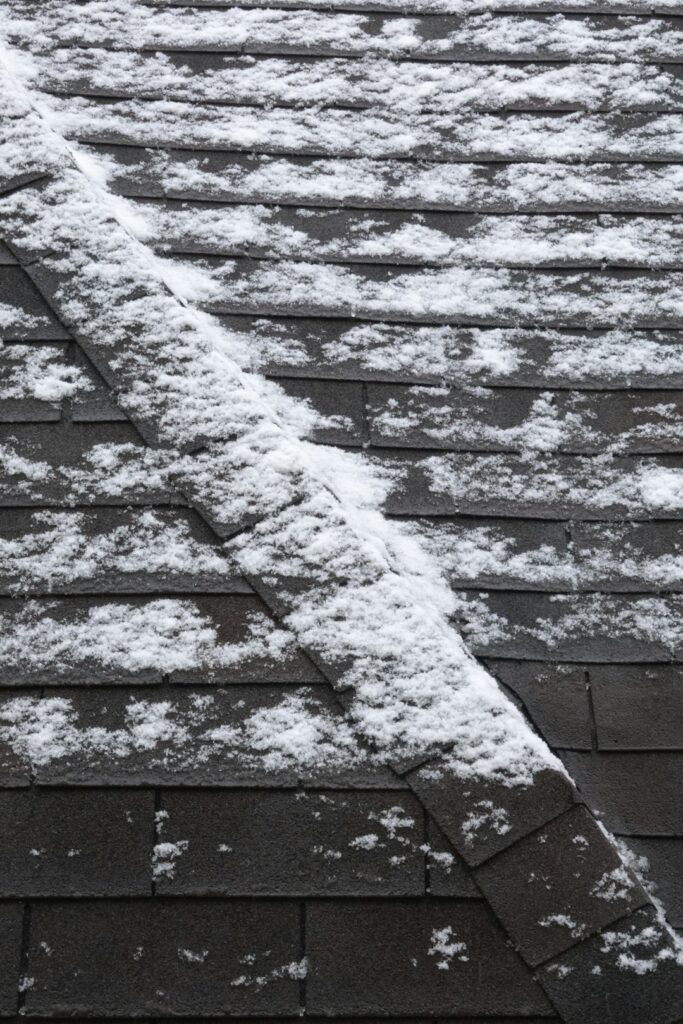
Snow and ice can collect in valleys, behind chimneys, near roof-wall intersections, and along eaves. As temperatures rise during the day and fall again at night, meltwater may refreeze in locations where it cannot drain freely. This can force water beneath roofing materials or expose weaknesses in flashing.
Winter conditions also make roof problems harder to see and correct. Snow can hide damaged shingles, while ice can conceal blocked drainage paths. A roof that appears acceptable from the ground may still have cracked sealant, loose flashing, or moisture beneath the surface.
Older homes may have additional vulnerabilities, including layered roofing materials, aging ventilation, sagging roof lines, or past repairs that were not properly integrated with the rest of the roof.
What happens if a roof leak is ignored through the winter?
An active leak can cause damage even when only a small amount of water enters the building. Insulation can lose effectiveness after becoming wet, and wood components may begin absorbing moisture repeatedly each time snow melts or rain falls.
A winter leak may also freeze inside a roof assembly. Frozen moisture expands and can widen cracks or openings. When the weather warms, the resulting water may enter suddenly and create a larger interior stain.
Watch for signs such as:
- Brown or yellow ceiling discoloration
- Damp attic insulation
- Frost or wet spots on roof sheathing
- Musty odors
- Dripping sounds during snowmelt
- Peeling paint around ceilings or upper walls
- Sagging drywall
- Water near light fixtures or electrical outlets
Water near electrical equipment deserves immediate caution. Avoid touching wet fixtures, switches, or exposed wiring. If there is active water near electrical components, shut off power to the affected area only if it can be done safely and without entering standing water.
Can a roof problem damage the structure?
Yes. Persistent moisture can weaken wood roof decking, rafters, trusses, and wall framing. Structural damage usually develops gradually, but heavy snow and ice can add stress to already weakened components.
New York building requirements account for roof loads, including snow loads. However, code-compliant construction does not mean a roof is immune to damage. Age, deferred maintenance, water intrusion, alterations, poor drainage, and unusually uneven snow accumulation can all affect performance.
Warning signs of a potentially serious structural issue include:
- A visibly sagging roof line
- Bowing ceilings
- Doors or windows that suddenly stick
- Cracks that appear or grow around ceiling and wall intersections
- Large areas of wet or deteriorated roof decking
- Unusual popping or creaking sounds during heavy snow
- Snow or ice collecting unevenly on one roof section

A roof with suspected structural movement should not be inspected by climbing onto it. Snow-covered, icy, or weakened roofing can fail under a person’s weight.
Does a roof leak always mean the roof must be replaced?
No. A leak does not automatically require full replacement. The appropriate response depends on the source, the age and condition of the roof, the amount of affected material, and whether the problem is isolated or widespread.
A limited issue may involve a damaged shingle, exposed fastener, failed flashing joint, blocked drainage point, or deteriorated pipe boot. In other cases, a roof may have many brittle shingles, widespread granule loss, recurring leaks, poor ventilation, or extensive moisture damage.
The key question is whether the roof still provides a reliable water-shedding surface after the underlying problem is corrected. Covering a symptom without addressing wet decking, deteriorated flashing, or trapped moisture can cause the leak to return.
Which roof problems should not wait?
Some conditions justify prompt attention because delay increases the chance of damage or injury:
- Water entering living areas during rain or snowmelt
- A ceiling that is sagging or bulging
- Missing roofing materials after high winds
- Exposed roof decking or underlayment
- Active leaking near electrical equipment
- A tree limb or other object resting on the roof
- A roof section that appears to have shifted
- Heavy ice accumulation combined with visible structural distress
Emergency measures should focus on protecting people and limiting interior damage. Place containers under drips, move furniture and electronics away from water, and avoid walking on wet ceilings or weakened flooring. Roof access during icy or snowy conditions can create a greater hazard than the original defect.
How can homeowners catch problems earlier?
Routine observation is more useful than waiting for a ceiling stain. After major wind, heavy snowfall, or a rapid thaw, look from the ground for missing shingles, exposed underlayment, displaced flashing, damaged vents, or sagging roof lines.
Inside the attic, check for damp insulation, daylight through the roof deck, rusty nails, water marks, and mold-like odors. Do not disturb suspected asbestos-containing materials or enter an attic with unsafe flooring, poor ventilation, or signs of structural weakness.
Keep gutters and downspouts clear of leaves and ice-related obstructions where safely accessible. Water should be directed away from the foundation rather than allowed to collect at the roof edge.
The financial lesson is straightforward: early roof maintenance is usually less disruptive than repairing the chain of damage that follows a neglected leak. In a climate with heavy snow, freezing temperatures, and repeated thawing, a small roof defect deserves attention before the next storm turns it into an interior and structural problem.
