
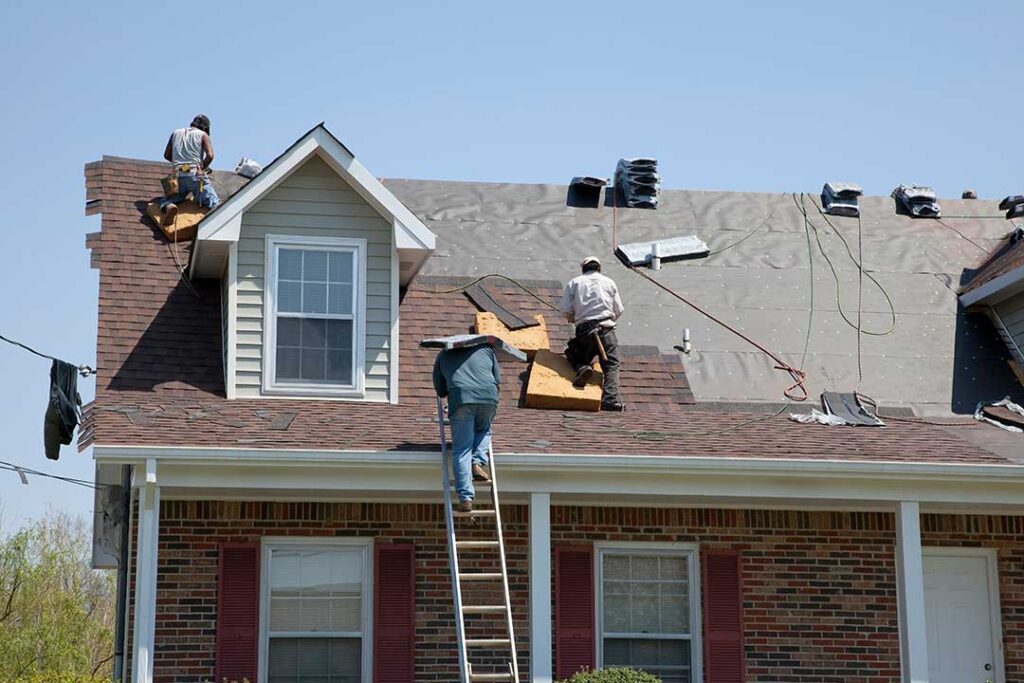
Choosing a roofing contractor requires more than comparing prices. A reliable decision depends on licensing and insurance, written documentation, knowledge of local weather conditions, workmanship standards, and the contractor’s ability to explain what the roof actually needs.
In Watertown, winter weather, freeze-thaw cycles, heavy snow, wind, and ice buildup can expose weaknesses that may not be obvious during a brief inspection. Homeowners should evaluate both the contractor and the proposed roofing system before work begins.
What should homeowners check first?
Start by confirming that the contractor is an established, identifiable business with appropriate insurance and a clear written process. A professional-looking website or a low price does not prove that a roofer is qualified.
Ask for:
- The contractor’s legal business name and physical mailing address
- Proof of general liability insurance
- Proof of workers’ compensation coverage for employees
- References for similar roofing projects
- A written proposal describing materials, labor, cleanup, and payment terms
- Information about who will supervise the work
Insurance matters because roofing involves fall hazards, property damage risks, and heavy materials. If a worker is injured or a neighboring structure is damaged, unclear insurance arrangements can create serious problems for the property owner.
Homeowners should verify that insurance documents are current and issued directly by the insurer or an authorized agent. A verbal assurance is not the same as documentation.
How can a homeowner tell whether a roofing proposal is complete?
A useful proposal should explain the planned work in enough detail that another qualified person could understand what is being installed. “Replace roof” is not a sufficient description.
The document should identify:
- The areas included in the project
- The type and manufacturer of roofing materials
- Underlayment and ice-barrier details
- Whether flashing will be replaced or reused
- Ventilation work, if any
- Treatment of roof edges, valleys, chimneys, skylights, and wall intersections
- Removal and disposal of existing roofing
- Protection for siding, landscaping, walkways, and exterior equipment
- Cleanup and magnetic nail collection
- Start and completion expectations
- Payment schedule and warranty terms
- Procedures for unexpected damage or additional charges
A proposal should also distinguish between a manufacturer’s product warranty and the contractor’s workmanship warranty. A product warranty generally covers defects in the roofing material under specific conditions. It may not cover installation mistakes, poor ventilation, improper flashing, or damage caused by severe weather.
Why does local weather knowledge matter?
Roofing materials must be installed correctly for the climate in which they will perform. In Watertown, roofs may face long periods of snow, strong winter winds, repeated freezing and thawing, spring moisture, and summer heat.
A contractor should be able to explain how the proposed system addresses:
- Ice dams and backed-up meltwater
- Snow sliding from steep roof surfaces
- Wind exposure at edges and corners
- Moisture entering around penetrations and wall transitions
- Attic condensation caused by poor ventilation
- Flashing deterioration around chimneys and roof-to-wall connections
Ice dams are not caused only by snow. They often develop when heat escapes into the attic, warms the roof deck, and causes snow to melt before refreezing at colder eaves. Simply adding more shingles does not correct that condition. The proposal should address insulation, air sealing, ventilation, and water-shedding details when those factors contribute to the problem.
What questions reveal whether a contractor understands the roof?
Specific questions are more useful than general claims about experience. Ask the contractor to explain what was found during the inspection and why each repair or replacement is necessary.
Helpful questions include:
- How old does the existing roof appear to be?
- Are there signs of deck damage, moisture intrusion, or inadequate ventilation?
- Which flashing components are being replaced?
- How will concealed damage be documented?
- What happens if rotten roof decking is discovered?
- How will the roof be protected if weather interrupts the project?
- Will workers use manufacturer-required installation methods?
- How will ventilation be balanced between intake and exhaust?
- Who will inspect the completed work?
A trustworthy explanation should be understandable without relying on pressure, fear, or technical language that cannot be clarified. Be cautious if a contractor claims that a roof must be replaced immediately without showing visible evidence, photographs, moisture findings, or a written explanation.
Should homeowners choose the lowest bid?
The lowest bid is not automatically the most economical choice. A very low price may reflect omitted materials, limited preparation, minimal flashing work, inadequate cleanup, or assumptions that later produce change orders.
Compare proposals by looking at the scope of work rather than the final number alone. Two bids may appear different because one includes new flashing, better underlayment, deck repairs, ventilation improvements, or full disposal while the other does not.
A higher price can be reasonable when it reflects more complete preparation or better materials. However, a higher price by itself does not establish quality. The proposal should explain what the added cost covers.
Homeowners should also avoid large upfront payments. Payment terms should correspond reasonably to materials delivered and work completed, while retaining enough balance to address incomplete cleanup, missing documentation, or unresolved workmanship concerns.

How should references and reviews be evaluated?
References are most useful when they involve similar roof types, comparable project sizes, and work completed long enough ago to reveal how the roof has performed through multiple seasons.
Ask references about:
- Whether the written scope matched the completed work
- How unexpected issues were handled
- Whether the property was protected during installation
- Whether cleanup was thorough
- Whether communication remained consistent
- Whether leaks or warranty concerns were addressed afterward
Online reviews can provide patterns, but they should not be treated as proof by themselves. Look for repeated comments about documentation, punctuality, workmanship, cleanup, and responsiveness. A long list of reviews with no explanation of the work may offer less information than a smaller set of detailed, verifiable references.
What warning signs should raise concern?
Certain behaviors deserve caution before a contract is signed:
- Pressure to decide immediately
- A proposal that exists only as a verbal promise
- Requests for full payment before work begins
- Reluctance to provide insurance documentation
- Unexplained differences between the proposal and the conversation
- Claims that a homeowner’s insurance policy guarantees payment
- A contractor who cannot identify the crew or project supervisor
- Recommendations for complete replacement without an inspection explanation
- Use of temporary patches presented as permanent repairs
- No written process for weather delays, concealed damage, or disputes
A contractor may identify storm-related damage, but insurance coverage is determined by the policy and the insurer’s review. The contractor should not guarantee that a claim will be approved or encourage a homeowner to misrepresent damage.
What should happen before work starts?
Before materials arrive, the homeowner should have a signed agreement and a shared understanding of the project. Photographing the exterior, driveway, landscaping, attic, and nearby structures can help document pre-existing conditions.
The agreement should clarify:
- Exact work areas
- Materials and installation methods
- Start conditions and weather delays
- Responsibility for permits or required notifications
- Change-order procedures
- Cleanup standards
- Warranty documentation
- Final inspection and payment conditions
For safety reasons, roof work should not be performed by untrained property owners when it involves steep slopes, ice, unstable surfaces, electrical hazards, or severe structural damage. A sound evaluation is especially important after wind events, heavy snow, falling branches, or visible ceiling staining.
Choosing carefully does not require selecting the most expensive contractor. It requires selecting a documented scope of work, verifying insurance, asking specific questions, and making sure the proposed roof addresses the conditions the home is likely to face through Watertown’s changing seasons.
