
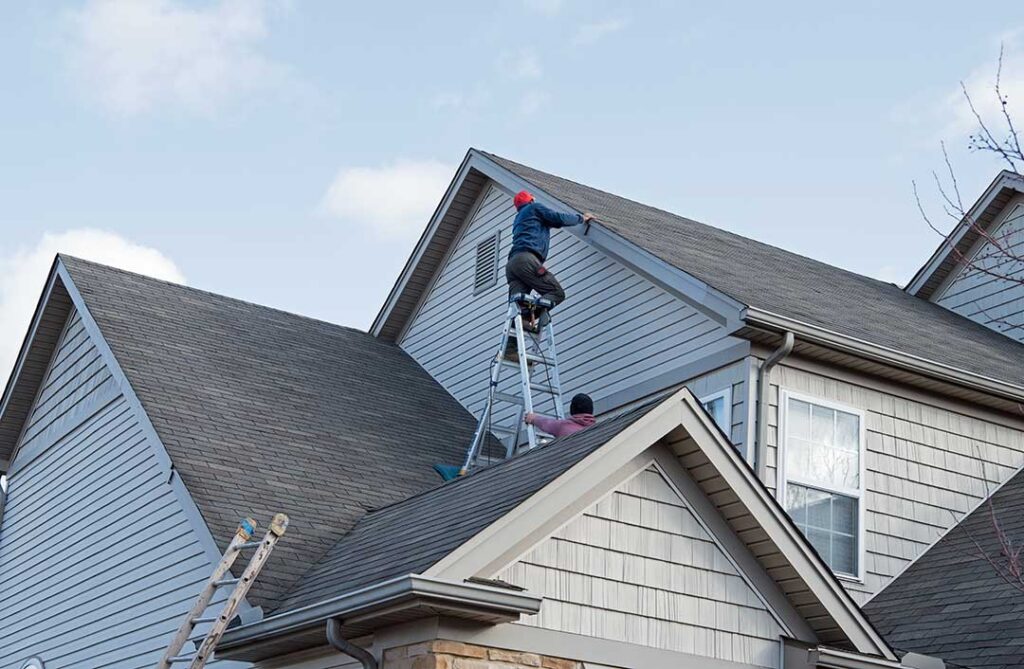
Roof debris can include leaves, small branches, pine needles, windblown litter, moss, and compacted snow. Removing it helps keep water moving toward the gutters and makes it easier to spot damaged shingles, flashing, vents, and roof edges.
For households in Watertown, seasonal debris is a routine maintenance concern. Autumn leaves, strong winds, heavy snowfall, ice formation, and spring thaw can all leave material on a roof or in its drainage system. The safest approach depends on the type of debris, the roof’s slope, its height, and whether the surface is wet or icy.
What debris should be removed from a roof?
Loose organic material and objects that can trap moisture should generally be cleared when they are safe to reach. Common examples include:
- Leaves and pine needles
- Small branches and twigs
- Seed pods, cones, and other plant material
- Windblown plastic or fabric
- Clumps of moss or accumulated organic matter
- Animal nesting material
- Snow or ice that is placing unusual weight on the roof
Debris becomes more concerning when it collects in valleys, behind chimneys, around roof vents, or along the lower edge of the roof. These areas can hold moisture against roofing materials and interfere with drainage.
A small amount of dry leaf litter is not automatically an emergency. The greater risks usually come from heavy accumulation, blocked drainage, sharp objects, or debris that remains wet for extended periods.
How can roof debris be removed safely from the ground?
For a low-slope roof or a roof that can be reached without climbing, a roof rake or soft-bristled extension tool may allow limited debris removal from the ground. Pull material gently toward the roof edge rather than forcing it across the shingles.
Use a tool designed for roofing or snow removal, with a non-abrasive head. Avoid metal rakes, garden tools with sharp edges, and anything that can scrape or puncture shingles. Work slowly so debris does not slide unexpectedly onto walkways, vehicles, windows, or people below.
Before starting, check the area around the building. Keep children and pets away, move outdoor items that could be damaged, and avoid working during gusty weather. Falling branches and tools can create hazards even when the roof itself is not being climbed.
Ground-based removal is not suitable for every roof. It may be ineffective on steep surfaces, roofs with fragile coverings, or areas where debris is lodged beneath flashing or mechanical equipment.
Should you climb onto the roof to remove debris?
Climbing onto a roof is usually unnecessary for ordinary leaf and branch removal and introduces significant fall risk. Wet shingles, frost, algae, moss, and loose granules can make footing unreliable. In Watertown, freezing temperatures and rapid weather changes can leave surfaces slick even when the roof appears mostly clear.
Avoid roof access when:
- The surface is wet, icy, frosted, or snow-covered
- The roof is steep or unusually high
- Wind is strong enough to move branches or ladders
- You cannot maintain three points of contact
- The roof covering appears brittle, loose, or damaged
- The work requires walking near skylights, vents, chimneys, or roof edges
If access is genuinely necessary because of a serious obstruction or suspected damage, fall protection and proper equipment are required. A ladder should never be used on unstable ground, against a gutter, or without someone securing the base. Improvised methods, such as standing on buckets, patio furniture, or stacked materials, create avoidable risks.
What is the safest way to remove leaves and small branches?
Start by removing large, loose objects from a safe position. Small branches can often be lifted away by hand if they are reachable without leaning over an edge or stepping onto an unsafe surface. Wear work gloves, because branches may contain sharp splinters, nails, or animal waste.
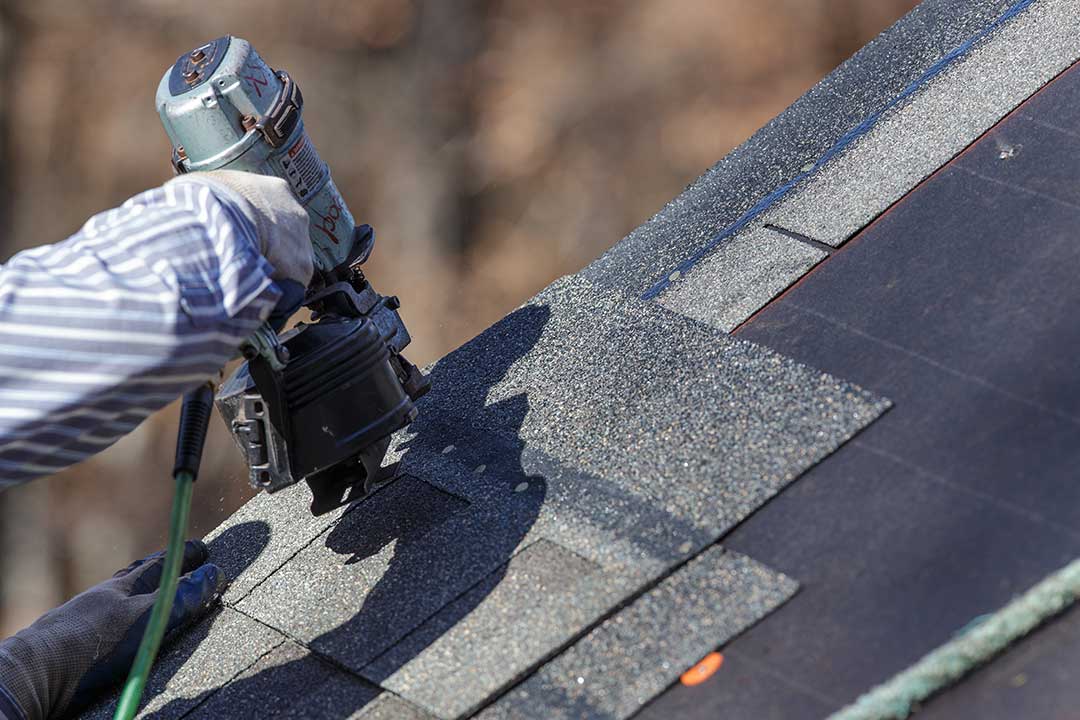
For leaves and needles, use a soft roof rake or a leaf blower only where the tool can be operated safely. Blowing upward or across a roof can send debris into vents, neighboring areas, or gutters. It can also disturb loose granules on asphalt shingles.
Do not drag heavy limbs across the roof. A branch that seems light may be caught under shingles, flashing, or a vent pipe. Pulling it free can worsen damage. Cut or lift only what can be handled without force, and stop if the material is entangled.
After clearing the visible debris, inspect the roofline from the ground. Look for missing shingles, lifted edges, exposed underlayment, bent flashing, sagging gutters, or material collecting in one unusual location.
How should roof valleys and gutters be handled?
Roof valleys and gutters deserve extra attention because they carry much of the roof’s runoff. Leaves and needles can form a dense mat in these areas, especially after repeated rain and freeze-thaw cycles.
Use a hand scoop or soft tool from a stable, safe position to remove loose material from accessible gutters. Do not place weight on the gutter itself, and do not use the gutter as a handhold. A clogged downspout may need to be cleared from the ground with water pressure or a suitable extension tool.
Debris in a roof valley should not be scraped aggressively. Scraping can remove protective granules or damage metal flashing. If the material is frozen in place, wait for safer conditions rather than chipping at it with a shovel or sharp object.
Water spilling over a gutter during rain does not always mean the gutter alone is clogged. It may also indicate a blocked downspout, an improperly pitched gutter, ice obstruction, or runoff that is being redirected by roof damage.
What about moss, algae, and wet organic buildup?
Moss and wet organic matter should not be pulled forcefully from shingles. Moss can grow around fasteners and beneath shingle edges, so removal by hand may detach roofing material.
Avoid pressure washing a roof. High-pressure water can strip granules, force water beneath shingles, and shorten the life of the roof covering. Household cleaners, chlorine products, and homemade chemical mixtures can also damage roofing, plants, siding, or metal components.
If moss is widespread or firmly attached, the problem requires more than ordinary debris removal. The safest response depends on the roofing material, the extent of growth, and whether the underlying surface has already been damaged.
How should snow and ice be treated?
Snow should not normally be removed by climbing onto the roof. A roof rake used from the ground may remove some light, loose snow, but forcing the tool against the roof can damage shingles and flashing.
Do not chop ice dams with an axe, shovel, or other sharp tool. Ice dams form when melting snow refreezes near the eaves, and breaking them apart can damage the roof edge, gutters, and waterproofing layers. Pouring hot water on an ice dam is also a poor solution because it can create refreezing and additional slippery conditions.
Heavy, uneven snow loads, visible roof sagging, cracking sounds, or water entering the attic require immediate caution. Keep people away from areas where falling ice or snow could land, and treat the condition as a safety issue rather than a routine cleaning task.
When should debris removal stop?
Stop work if debris is attached to the roof, if shingles lift during removal, or if you find exposed wood, damaged flashing, punctures, or water stains inside the attic or upper rooms. Also stop when the roof cannot be reached without unsafe climbing.
Roof debris is often a symptom rather than the main problem. A fallen branch may reveal impact damage, while repeated debris in one area may point to an overhanging tree, a drainage defect, or a damaged roof component. Removing the material without addressing the cause may allow moisture problems to continue.
For routine maintenance, inspect from the ground after major wind events, heavy snowfall, and autumn leaf drop. Keeping gutters and downspouts clear, trimming hazardous branches from a safe distance, and watching for early signs of damage can reduce the need for risky roof access.
